
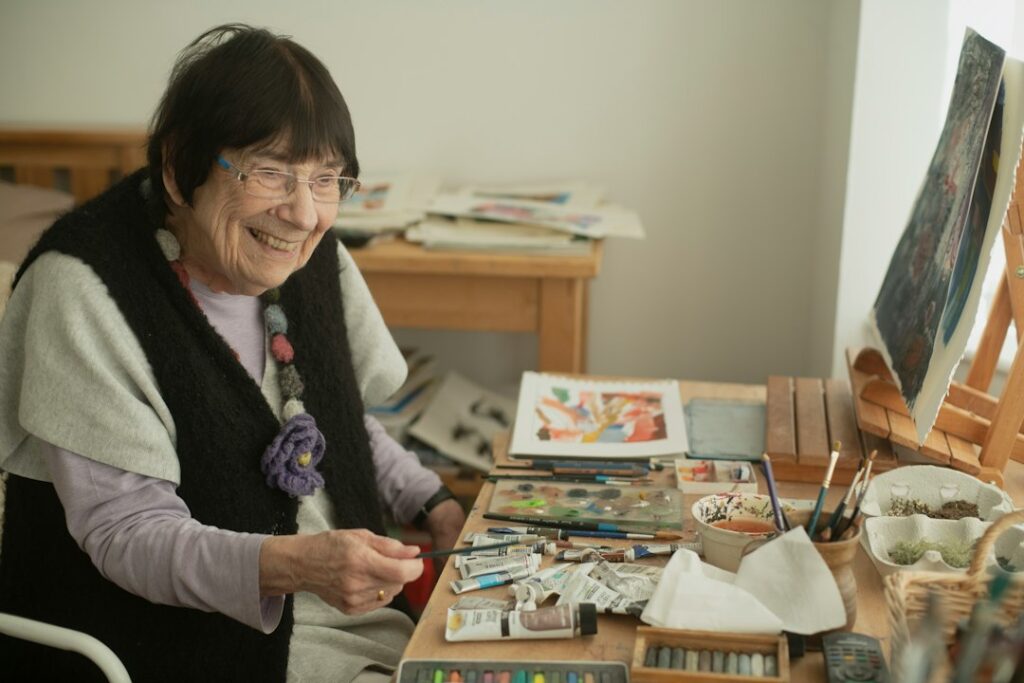
Creative activities in assisted living support more than entertainment. They can strengthen self-expression, memory, hand coordination, confidence, social connection, and daily purpose. In Union City, PA, residents and families can look for programs that respect individual interests while adapting to changes in vision, hearing, mobility, energy, and memory.
Why does creativity matter in assisted living?
Creative expression gives older adults a meaningful way to make choices, communicate feelings, and stay connected with others. A resident does not need formal artistic training to benefit from music, drawing, gardening, storytelling, crafts, cooking, or other hands-on activities.
Creativity may support:
- A sense of identity and independence
- Conversation and social participation
- Fine-motor movement and hand strength
- Attention, memory, and problem-solving
- Emotional expression and stress relief
- A feeling of accomplishment
- Connection with family traditions and personal history
Creative programming should not be treated as a test of artistic ability. The purpose is participation, enjoyment, and personal meaning—not producing a perfect finished product.
What types of creative activities work well for older adults?
A strong activity program offers different kinds of expression so residents can choose what feels comfortable. Activities should include both familiar options and opportunities to try something new.
Possible choices include:
- Watercolor painting, colored pencils, or washable markers
- Collage-making with large, easy-to-handle materials
- Knitting, crocheting, quilting, or simple textile projects
- Decorating greeting cards for family members
- Singing familiar songs or listening to resident-selected music
- Writing short memories, poems, letters, or family stories
- Seasonal flower arranging or indoor container gardening
- Baking, decorating, or preparing simple recipes
- Photography, picture sorting, or family-history displays
- Clay modeling, wooden crafts, or other tactile projects
- Group storytelling based on local seasons, work experiences, or traditions
Some residents may prefer quiet individual work, while others enjoy lively group activities. Offering both formats helps prevent creativity from becoming another obligation.
How can activities be adapted for different abilities?
Creative activities are most successful when the task can be changed without making the resident feel singled out. The same project may be offered at several levels of difficulty.
For a resident with arthritis or limited hand strength, use larger handles, lightweight tools, pre-cut materials, and containers that are easy to open. A table-height project may be more comfortable than an activity requiring extended standing.
For someone with vision changes, consider:
- High-contrast paper and materials
- Larger print instructions
- Strong lighting without glare
- Raised or textured materials
- Verbal descriptions of colors, shapes, and steps
For residents with memory loss, activities with a familiar rhythm or sensory connection may be especially approachable. Sorting buttons, folding fabric, arranging flowers, singing well-known songs, or looking through family photographs can encourage participation without requiring residents to remember a sequence of instructions.
Instructions should be brief and offered one step at a time. Demonstrating the first step is often more helpful than giving a long explanation.
What if a resident says they are not creative?
Many older adults associate creativity with drawing or painting and may assume they are not capable. A helpful response is to broaden the definition. Creativity can involve choosing colors, telling a story, arranging objects, remembering a recipe, selecting music, or finding a new use for familiar materials.
Rather than asking, “Do you want to do an art project?” try offering a specific, low-pressure choice:
- “Would you like to choose music for the group?”
- “Could you help arrange these flowers?”
- “Would you like to decorate one card or watch first?”
- “Which color would you like to use?”
- “Would you like to tell the story behind this photograph?”
Giving residents a meaningful role can be more inviting than asking them to complete a finished product. Watching, advising, choosing materials, and sharing memories are all valid forms of participation.
How can families support creativity during visits?
Family visits can become more engaging when they include a shared creative activity. The project does not need to be elaborate. Looking through photographs, listening to favorite songs, folding paper, decorating cookies, or discussing a familiar craft can provide a natural focus for conversation.
Families may also bring safe, familiar materials connected to a resident’s history, such as:
- Copies of family photographs
- Favorite recipes
- Fabric samples or buttons
- Large-print books of poetry or nature
- Music recordings
- Postcards, greeting cards, or seasonal decorations
- Photographs of gardens, pets, hobbies, or past workplaces

It is helpful to ask before bringing materials, especially if a resident has allergies, swallowing risks, confusion, or difficulty managing small objects. Items should be clean, easy to identify, and appropriate for the resident’s current abilities.
How do seasonal conditions affect creative programming?
In a community with cold winters, wet weather, and changing daylight, indoor creative activities can provide structure when outdoor time is limited. Winter projects may include paper snowflakes, music sessions, memory-based storytelling, indoor gardening, or nature-themed artwork.
During warmer months, activities can move outdoors when shade, seating, hydration, and safe walking surfaces are available. Gardening, sketching, bird observation, and arranging flowers can connect residents with the changing landscape without requiring strenuous activity.
Seasonal programming should avoid assuming that every resident celebrates the same holidays. Nature, local history, family traditions, and the changing seasons offer inclusive themes that can be adapted to different beliefs and backgrounds.
What safety concerns should be considered?
Creative activities should be reviewed for fall hazards, choking risks, sharp tools, toxic materials, allergies, and excessive fatigue. Small beads, buttons, loose craft pieces, hot surfaces, scissors, and strong adhesives may not be appropriate for every resident.
A safe setup includes:
- Clear walkways and stable seating
- Materials placed within comfortable reach
- Non-slip table coverings when needed
- Good lighting and adequate ventilation
- Supervision for tools, heat, liquids, or small objects
- Rest periods for residents who tire easily
- Simple cleanup to prevent spills and clutter
Safety should be balanced with independence. Removing every challenge can make an activity less satisfying. The goal is to provide reasonable support while allowing residents to make choices and do as much as they can safely manage.
How can staff tell whether a program is working?
Participation numbers are only one measure. A resident who attends for ten minutes, chooses a color, hums along to music, or talks about a past hobby may be benefiting even without completing a project.
Useful observations include:
- Does the resident show interest or initiate participation?
- Does the activity lead to conversation?
- Does the resident appear relaxed, focused, or pleased?
- Are residents returning to a preferred activity?
- Can the task be adjusted to reduce frustration?
- Do residents have genuine choices?
- Are quieter residents included without pressure?
Feedback from residents and families can guide future programming. Preferences may change over time, so activities should be revisited rather than treated as permanent based on one earlier response.
Creative life in assisted living is strongest when it reflects the whole person—not only age, diagnosis, or physical ability. A resident’s past work, hobbies, family traditions, favorite music, and personal sense of humor can all provide useful starting points for meaningful daily activities.
